












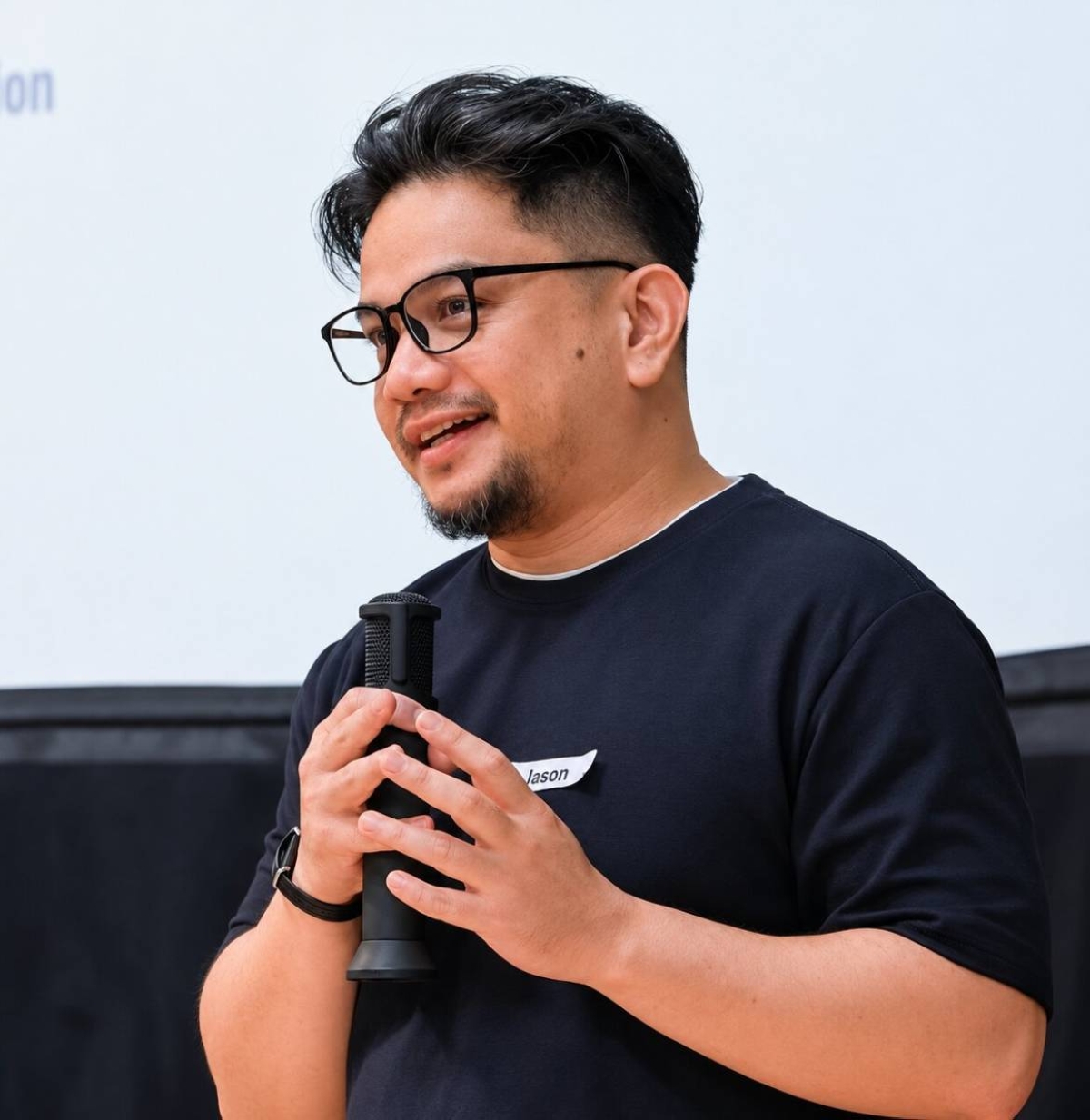
JASON Torres describes himself as “a builder of things.”
He’s a technology leader with decades of experience building engineering teams and cofounding early-stage startups across London, Melbourne, San Francisco, and Manila.
He also founded BetterGov.ph, a civic-tech movement focusing on data transparency and digital democracy in the Philippines, with over 7,000 members on Discord and supporters all over the world.

Read the story of this techie who transformed his anger over the flood control scandal into something positive.
What was your course in college and how did you initially see yourself after graduation?
I took an IT course in college. But I have been coding since I was 12, or even younger. I have always been obsessed with computers and coding, and I have always dreamed of being a software engineer. So you could say that I’ve been living the dream.
Your website says you’ve spent “25 years building software, 15 years leading engineering teams, and 10 years founding companies.” That’s one hell of a track record. Can you walk us through on how it all happened?
I started as a software engineer and [then went on] to lead engineering teams. From there, I [moved to] software services companies in the Philippines, doing software outsourcing work, and that’s still a big part of what I do now.
But alongside [providing] services, I kept ending up as technical cofounder with the people I was building companies for. Over the years, I have cofounded startups around the world, across legal tech, events, commerce, and more. I’m currently based in London, and I’ve been lucky to build and scale several successful companies from zero.
In September 2025, I founded BetterGov.ph. Earlier this year, I joined a UK startup as a founding engineer, working on data engineering and backend infrastructure.
So, the pattern has been to keep the services business running and co-found products with the people I work with. It’s always been about building things.
You’re very outspoken in tech circles and an advocate of transparency in public/government data. Is that how the idea of creating the BetterGov.ph portal start?
Not in a straight line. The flood control scandal in 2025 was my own political awakening. I got tired of only being angry. I thought, I can make a better version of our government websites.
The first project was a portal to help citizens discover government services. It cost around P3,000. I started alone, and in mid-September 2025 a handful of volunteer friends helped me launch it. Within days, people I had never met were filing pull requests, joining our Discord, and starting their own civic-tech projects.
That is when I realized the opportunity was not just one website. It was a community that could keep making public information usable — budgets, contracts, flood-control projects — so ordinary Filipinos could see where their taxes go. The advocacy came with the work. The work started with shipping something people could use.
BetterGov, along with the People’s Budget Coalition (PBC), is now synonymous with exposing the red flags in the 2027 national budget. Did the collaboration with PBC happen organically, meaning, it resulted from the common desire to act on a problem that everybody was complaining about but didn’t know how to solve?
Yes, it happened organically. But it is not exclusive to the 2027 national budget. PBC and BetterGov have been doing this for quite a while across different departments and different partnerships with the government, mostly focused on data transparency and open data.
Our BetterGov Fellowship program is a good testimony to how the civil society organizations (CSOs), the government, and the tech industry can work together.
The Senate Finance Committee chaired by Sen. JV Ejercito has recommended removing P97 billion worth of public works projects from its version of the proposed 2027 national budget. Do you take this as an early small victory that nonetheless needs more vigilance?
I would not rush to call it a victory, [but rather] a sign that scrutiny can still change a document. That matters. After last year’s investigations, the public was right to expect tighter rules, not a return to business as usual.
It is also early. This is the Senate’s version, not the final law. There is still a plenary debate, and then a bicameral conference with the House. The People’s Budget Coalition had already flagged a much larger basket in the House bill, including thousands of DPWH insertions. Cutting P97 billion is not the same as cleaning the whole budget.
So, yes, it needs more vigilance. Transparency is useful only if people keep using it until the enacted law, and after the money is actually spent.
On your website you also point out how the term “open data” is used wrongly by the government on its own websites. Do you think it’s a deliberate act or, to paraphrase a recent comment on details of the Sara Duterte impeachment trial, “just an honest mistake”?
It’s hard to say, but I don’t think it’s deliberate. I think it’s more a lack of either the skills or the intention to display open data properly, in a way citizens can understand.
A lot of what gets labeled open data on government sites is really just documents posted online: scanned PDFs, tables you can’t download, files with no structure. I call that data decoration. It looks like transparency, but you can’t actually do anything with it. Real open data is machine-readable, complete, kept up to date, and free to reuse, so a journalist, a researcher or a student can actually analyze it.
We see this all the time at BetterGov. When we work on the budget, a lot of effort goes into turning documents into usable data before we can even start looking for red flags. Once it’s structured, the patterns start to show, and that’s exactly why it matters.
So, I’d rather not assume bad faith. The fix is capacity and standards: train people, publish in open and standard formats, and treat citizens as the users of that data. That’s where civic tech can help by showing what good looks like.
Is it right to say that BetterGov and eGovPH have complementary services? The two platforms were supposed to partner but one of their proponents, DICT Undersecretary for E-Government David L. Almirol Jr., was meted a six-month preventive suspension. Any update on the partnership?
Yes, I’d say they’re complementary, and the partnership is still ongoing. It’s important to say that BetterGov is working with the agency, not the person. Despite Undersecretary David Almirol’s preventive suspension, the work still continues because we’re working with the institution, not with any one individual.
Right now DICT and BetterGov have a lot of great plans together. Broadly, it’s about making government services and information easier for citizens to find and use, and giving the tech community a responsible way to help build them, with the right approvals in place. I can’t go into specifics yet, but we’re excited about what’s coming.
And to be clear, BetterGov is a civic tech community. We’re not government, and we're not GovTech, so our focus is mostly on civic projects. That’s what makes the partnership work: the government brings the mandate and the reach, and the community brings the builders, the speed and the citizen’s perspective.
You’re based in England but you also seem to be in the thick of the action in the motherland. How do you sustain your energy and passion as a “builder of things”?
I grew up in Manila, and I now split my time between London and Manila. Living in London, which I consider one of the greatest cities in the world, gives me a useful perspective. You cannot help comparing the two cities you spend a lot of time in. That comparison does not make me less Filipino. If anything, it made the work feel more urgent.
Distance is a constraint, not an excuse. Much of the early BetterGov organizing happened across time zones, on Discord and Facebook, with volunteers I had never met. The work is for people at home, and being abroad does not change that.
What sustains me is simpler than it sounds. I like building things. I code daily. I still get angry about wasted public money, and I try to put that energy into a tool, a dataset, or a community someone else can use. I fund and run the movement in much the same way I have run my companies. And I am still learning, still shipping. That is enough to keep a builder going.
You’re also into game development, and you say, “It’s where engineering meets art, where systems thinking becomes play. Games keep me sharp and remind me that software can be joyful, not just functional.” Does that say anything, too, about young people who love video games?
I do think that says something hopeful about young people who love games. They are already practicing systems thinking, whether they use those words or not. They learn how rules work, how to fail and try again, how to collaborate, and how a small change can alter a whole world. Those are the same muscles you need to read a budget, ship a civic-tech tool, or organize with other people.
A love of games is not frivolous. It can be a way into building, if we treat it as a craft and not only as a pastime.
Do you believe that today’s youth are again helping change the world, just like the activists of the 1960s and ’70s?
Yes. I have seen it up close. A year ago BetterGov.ph was a late-night idea. Then strangers started contributing code, cleaning messy government datasets, mapping flood-control projects, sitting through budget hearings, and teaching each other how to read a budget line. Many of them are young. I have watched journalists, students, researchers and engineers use tools we shipped in weeks, not years. That only happens when a lot of people want to help and were waiting for a place to put the work.
I would not flatten it into a simple rerun of the ’60s and ’70s. The tools are different, and so is the country. But the instinct is familiar: young people refusing to accept that the official story is the only story, and doing something with that refusal.
My advice is the same one I give young professionals who feel powerless. Start with something small enough to finish this month. You do not need a title or a political connection. Follow one number, tell one other person what you found, or ship one small tool. Democracy scales through ordinary people who are slightly more informed than they were last week.
